
EUREKA, California — March 2026 — Across the Western U.S., healthcare and senior housing operators are continuing to seek expansion opportunities in a market where traditional financing often struggles to keep pace with real-world business conditions. In 2026, many acquisition opportunities involve facilities that require operational restart, repositioning, or renewed investment—especially in sectors like assisted living, where strong operator experience may not always align neatly with conventional underwriting models.
For borrowers pursuing these opportunities, the challenge is often not the business’s long-term viability but the financing structure needed to get there. Properties with interrupted operating histories, post-pandemic closures, or startup-style reopening plans can present hurdles for traditional banks, even when the borrower has a clear strategy and a proven track record in the industry.
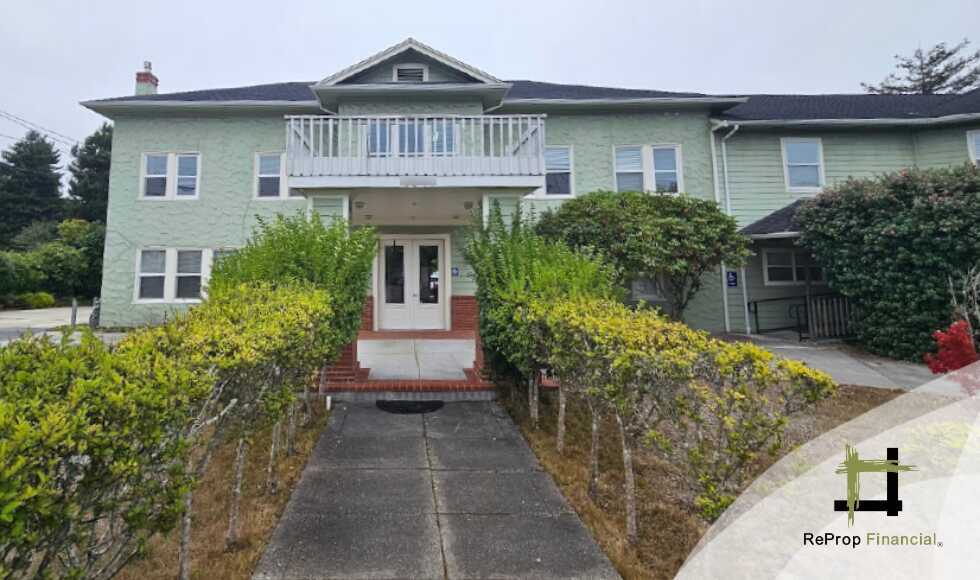
ReProp Financial recently helped an experienced assisted living operator secure financing to acquire a facility that had remained closed for several years following the COVID-19 pandemic. Although the borrower had successfully operated other assisted living facilities and had a clear plan to reopen and stabilize the property, the lack of recent operating history made it difficult to obtain financing through conventional lending channels.
Three key trends are shaping transactions like this in today’s lending environment. First, experienced operators are increasingly identifying value in underutilized or inactive care facilities that can be brought back online through operational expertise and targeted improvements. Second, many borrowers are looking beyond traditional bank and private money options to financing structures that preserve liquidity for ramp-up costs, staffing, and improvements. Third, lenders and borrowers alike are placing more value on financing programs that account for both the real estate and the operating business behind the transaction.
In this case, ReProp Financial introduced the borrower to the SBA 504 loan program, allowing the acquisition to be structured around both the property and the borrower’s experience as an operator. The financing covered approximately 80% of the purchase price, significantly reducing the upfront capital required to close while preserving working capital to reopen the facility and bring it back into service.
“Some of the strongest opportunities in today’s market involve properties that need a second life, not just a standard loan,” said Dane Valadao of ReProp Financial. “When experienced operators have a solid business plan, the right financing structure can help bridge the gap between a challenging acquisition and a successful reopening.”
ReProp Financial is a direct commercial real estate lender serving clients nationwide, with a strong presence in California, Nevada, and Arizona, including Eureka, California, Reno, Nevada, and Scottsdale, Arizona. The firm supports investors, developers, brokers, and business owners throughout California, Oregon, Washington, Idaho, Nevada, Arizona, and Texas, including Austin, Dallas, Houston, and San Antonio, by providing commercial capital designed for real-world transaction conditions—including business acquisitions, transitional properties, and projects that require more flexible underwriting.
To learn more about SBA financing options and creative lending solutions for commercial real estate and business acquisitions, visit https://www.repropfinancial.com.
About ReProp Financial
ReProp Financial is a direct commercial real estate lender known for practical insight, market expertise, and personalized financing solutions for investors, developers, brokers, and business owners nationwide. With a strong footprint in the Western U.S. and Texas, ReProp Financial helps clients navigate changing market conditions and execute property strategies with responsive capital.
Learn more at https://www.repropfinancial.com.